Summary Table of Contents
Automated vector conversion reaches a point of negative returns whenever raster resolution drops below workable contrast thresholds.
- Repeated threshold adjustments cannot synthesize geometric symmetry that does not exist in the source pixels.
- Manual redrawing creates mathematically continuous curves that eliminate blade chatter and reduce weeding failures.
- Beginning with basic geometric primitives resolves ninety percent of symmetrical logo emblems faster than cleaning traced paths.
01. Diminishing Returns of Repeated Threshold Tweaks
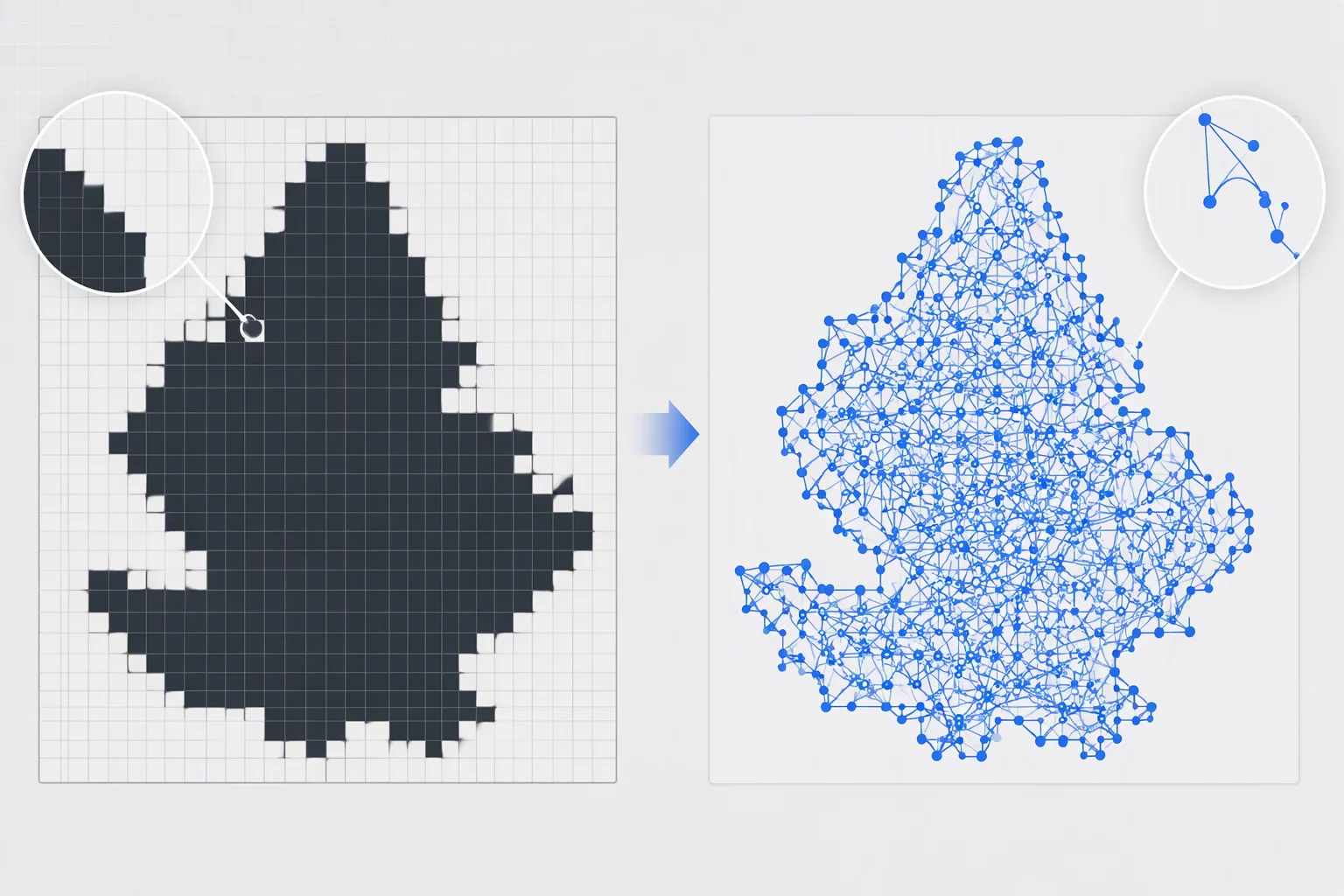
Digital craftspeople frequently spend hours toggling the high-pass filter and threshold sliders within Silhouette Studio trace. Designers hope that finding a magical numerical value will miraculously clean up low-resolution scans, blurry photos, or compressed icons. The raster to vector engine interprets every transitional pixel as an intentional structural edge, turning slight compression artifacts into jagged steps.
Threshold adjustments do not rebuild missing clarity. Raising the value causes adjacent elements to merge into indistinct blobs, while lowering the value breaks delicate perimeters into disconnected fragments. Once three successive trace attempts fail to yield clean cut boundaries, running a fourth trace is simply a waste of project time.
02. Structural Distortion and Node Accumulation
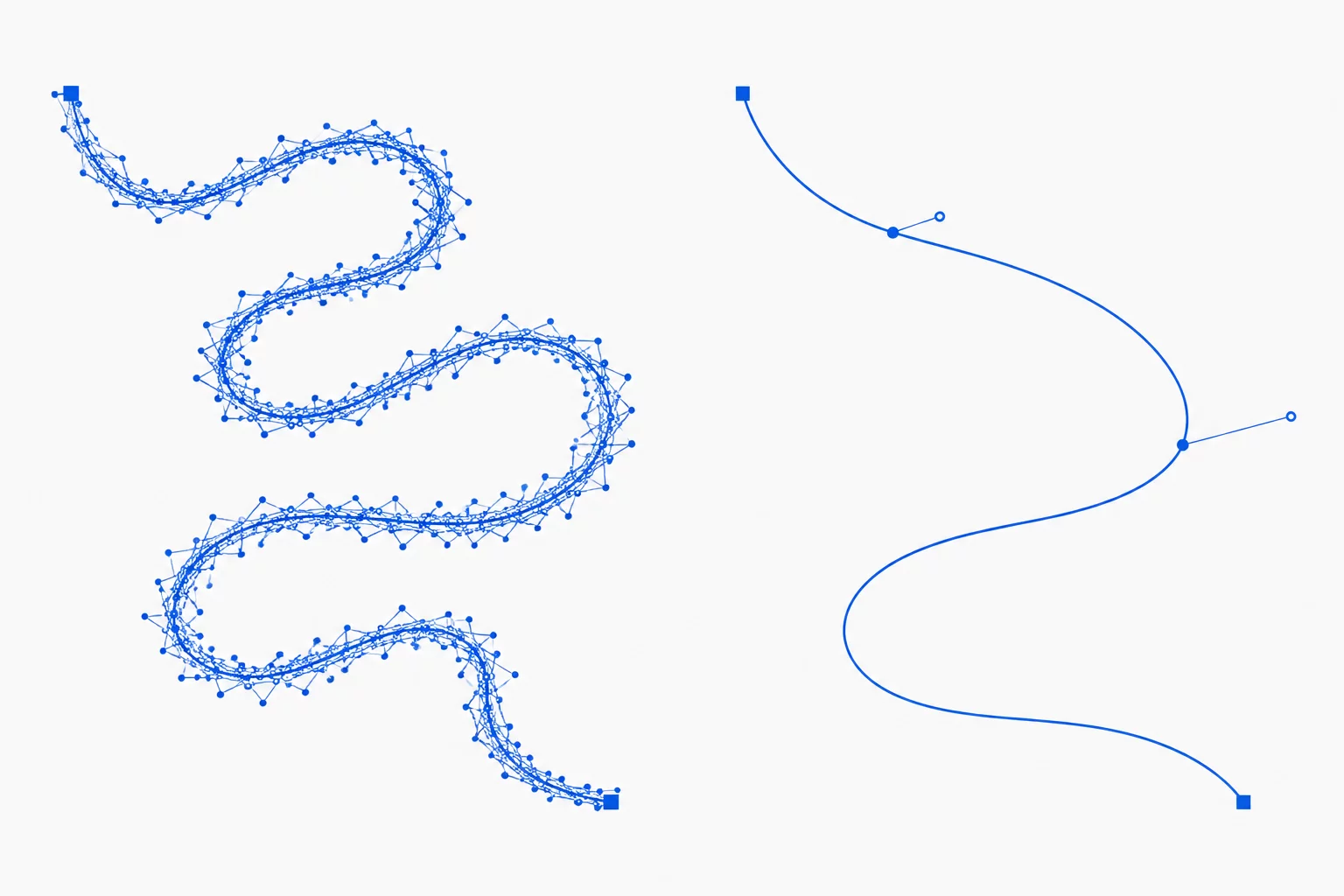
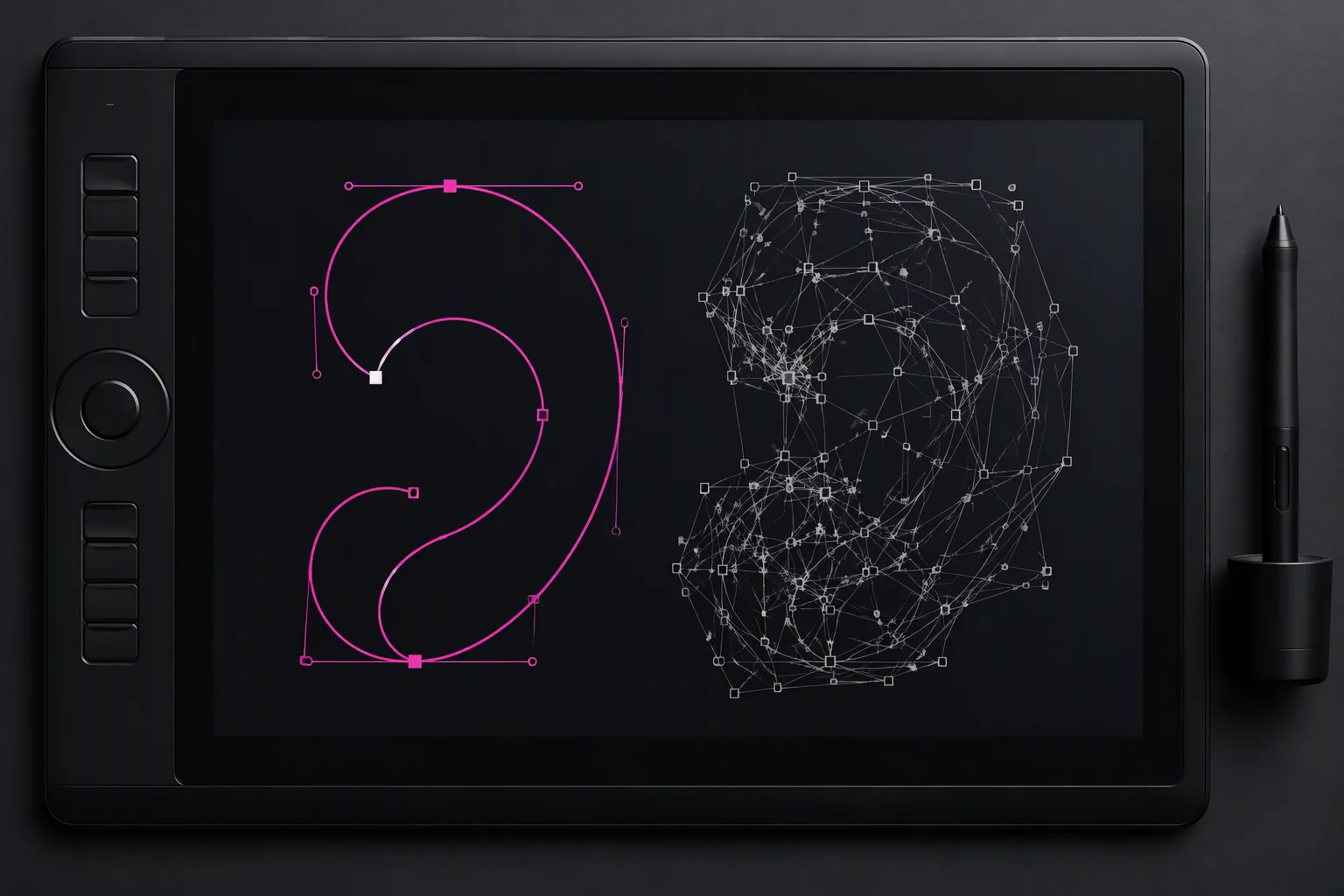
Automated software algorithms do not understand deliberate design intent. When processing an image trace of a circle, the software places dozens of irregular anchor points along the perimeter to match subtle pixel variations. An experienced designer sees a pure geometric circle, but the automated trace records irregular polygon steps.
When automated edge detection consumes more than ten minutes of threshold tweaking, manual pen drafting recreates the original design intent in half the time.
This avalanche of redundant points creates severe problems on cutting plotters. A mechanical blade must pivot, decelerate, and change heading at every single node, resulting in chewed vinyl edges, torn cardstock corners, and noisy cut cycles. Manual drafting bypasses this entire failure cascade by defining the same arc with two smooth anchor points and balanced bezier handles.
03. Geometric Benchmarks and Blade Mechanics
A direct comparison between automatic tracing and manual vector drafting reveals distinct mechanical advantages during production cutting:
- Node Density Variance: Automated image trace yields 280 to 460 nodes on an emblem, whereas manual redrawing establishes the identical silhouette using 18 precise anchor points.
- Cutter Head Travel Time: Plotting heads pause and stutter on microscopic auto-trace clusters, tripling physical cut duration across standard adhesive vinyl.
- Corner Sharpness Retention: Manual anchor vectors preserve exact 90-degree junctions, preventing the blade swivel drag marks typical of raster edge interpretations.
Plotter blades maintain constant downward pressure best along continuous curves. Jagged nodes created by trace tools force the blade holder to vibrate, producing microscopic serrations that complicate weeding. Manual vectors produce clean, unified peel borders that release without ripping.
04. Strategic Decision Protocol for Manual Drafting
Rebuilding geometry manually is remarkably straightforward when approached methodically. Lock the source raster layer onto the canvas and dim its opacity to thirty percent. Identify fundamental shapes first: lay down true circles, rectangles, and polygons before touching the freehand pen tool. Boolean tools like Weld, Intersect, and Subtract build composite emblems with mathematical accuracy.
Switching from automated tracing to manual redrawing requires changing your initial reflex. Instead of viewing manual drafting as a labor-intensive chore, treat it as the quickest path to production-ready cutting paths. Five minutes spent dropping true vector primitives routinely outperforms an hour spent fighting an uncooperative trace slider.