Summary Table of Contents
Preserving microscopic details during automated tracing requires maintaining strict balance between edge contrast and vector curvature algorithms:
- Strokes narrower than 2 pixels dissolve when global threshold limits do not accommodate subtle edge gradients.
- Over-smoothing curves removes acute corners, turning delicate accents and serifs into blunt, distorted mounds.
- Pre-processing with localized high-pass sharpening isolates hairline boundaries prior to node computation.
01. Luminance Threshold Sensitivity in Delicate Contours
Automated vectorization engines assess source artwork by inspecting regional pixel luminance against a user-defined threshold baseline. When a graphic includes fragile filigrees, hairline decorative stems, or miniature internal accents, the brightness delta separating the stroke from its backdrop diminishes significantly. In tools such as Silhouette Studio trace routines, a global threshold setting evaluates whether each pixel qualifies as a solid fill or negative space. If that threshold leans too conservatively, micro-contours fail to trigger recognition, producing fragmented outlines or completely missing vector loops.
Anti-aliasing introduces an additional layer of complication along delicate contours. Peripheral sub-pixels blend the stroke tone into ambient background shades, causing edge detection logic to interpret fine boundaries as soft gradients rather than definitive edges. Magnifying the input raster confirms whether fine strokes retain sufficient core density to satisfy the detector. Calibrating threshold sensitivity ensures fragile components survive initial vector generation without vanishing from the design canvas.
02. High-Pass Pre-Filtering and Border Isolation
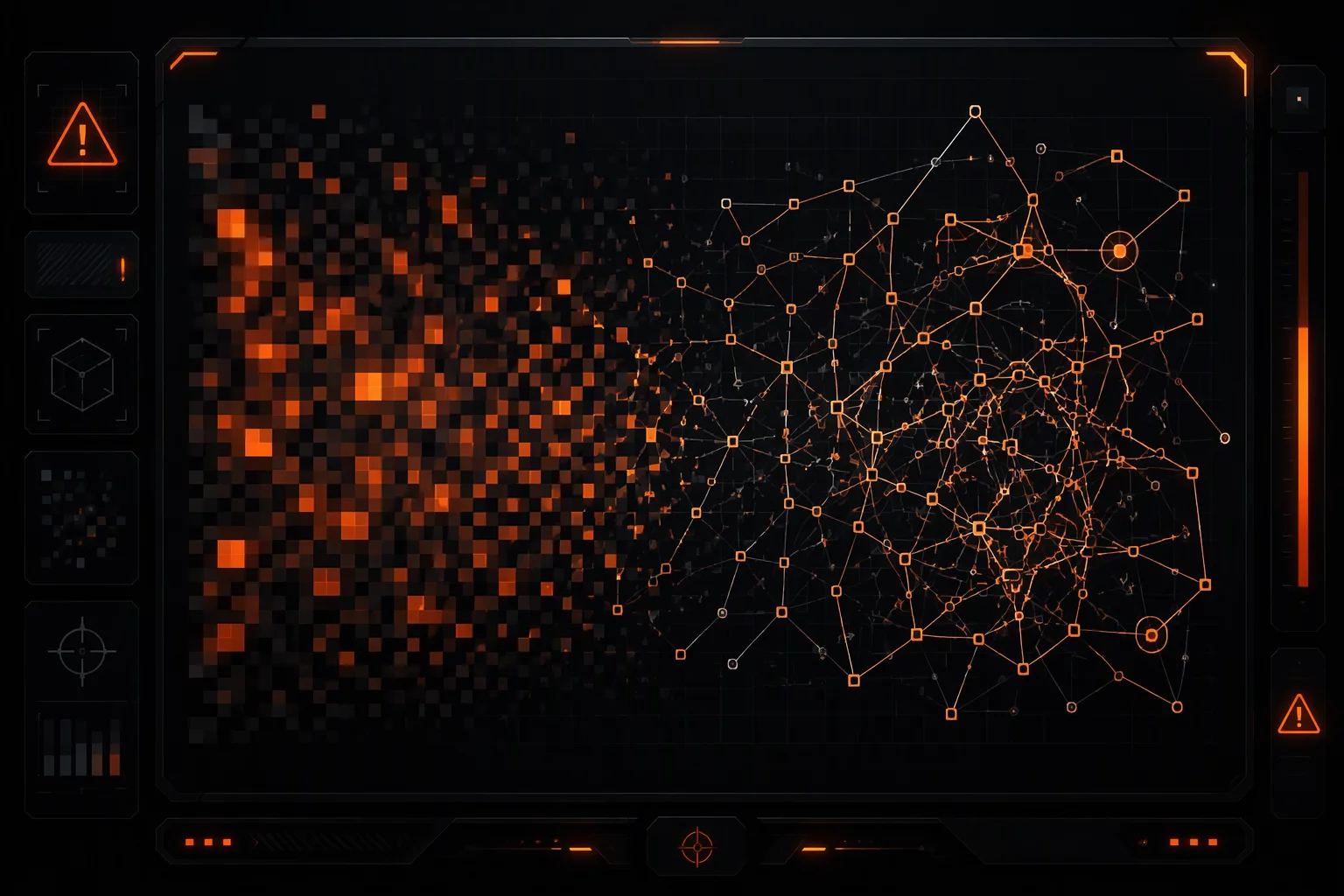
Securing consistent retention across fine structures frequently requires contrast normalization prior to trace computation. Applying a calibrated high-pass filter dampens broad low-frequency tonal shifts while emphasizing high-frequency pixel transitions. In complex designs containing uneven lighting or varied gradients, global cutoff thresholds invariably fail by swallowing delicate details in light regions while flooding darker sectors with unwanted vector debris.
"Detail preservation depends on equalizing localized contrast values across the artwork before automated vector calculations begin."
When high-pass processing stabilizes peripheral contrast, miniature features register with predictable fidelity throughout the tracing matrix. Within Silhouette Studio trace operations, this preliminary adjustment allows fine filigrees and sharp points to emerge cleanly. Graphic operators avoid trading away fragile flourishes simply to prevent random background specks from contaminating the composition.
03. Preserving Tight Curvature and Point Geometry
Once edges are successfully recognized, path fitting routines generate sequences of bezier curves and anchor points along the perimeter coordinates. Intricate details present an engineering challenge because their turning radii are exceptionally compact. If the curve smoothing parameter applies broad mathematical averages, the engine wipes away acute angle points, converting sharp tips and tiny notches into generic curved bubbles.
- Minimum Physical Stem: Outlines narrower than 0.75 mm require targeted manual verification to prevent blade chatter or media lifting during vinyl plotting.
- Anchor Distribution: Tight turns demand concentrated node placement with balanced handle lengths to avoid angular, faceted tangents.
- High-Pass Filter Radius: Pre-filtering operates most reliably with an unsharp radius spanning 1.2 to 2.5 pixels to isolate minute linework.
Maintaining geometric fidelity also benefits from scaling the source raster before initiating the trace. Doubling image dimensions enlarges the coordinate space allocated to small details. This expanded raster grid delivers enough discrete pixel columns for tracing algorithms to plot independent entrance and exit tangents around micro-scale turns.
04. Practical Node Consolidation for Physical Output
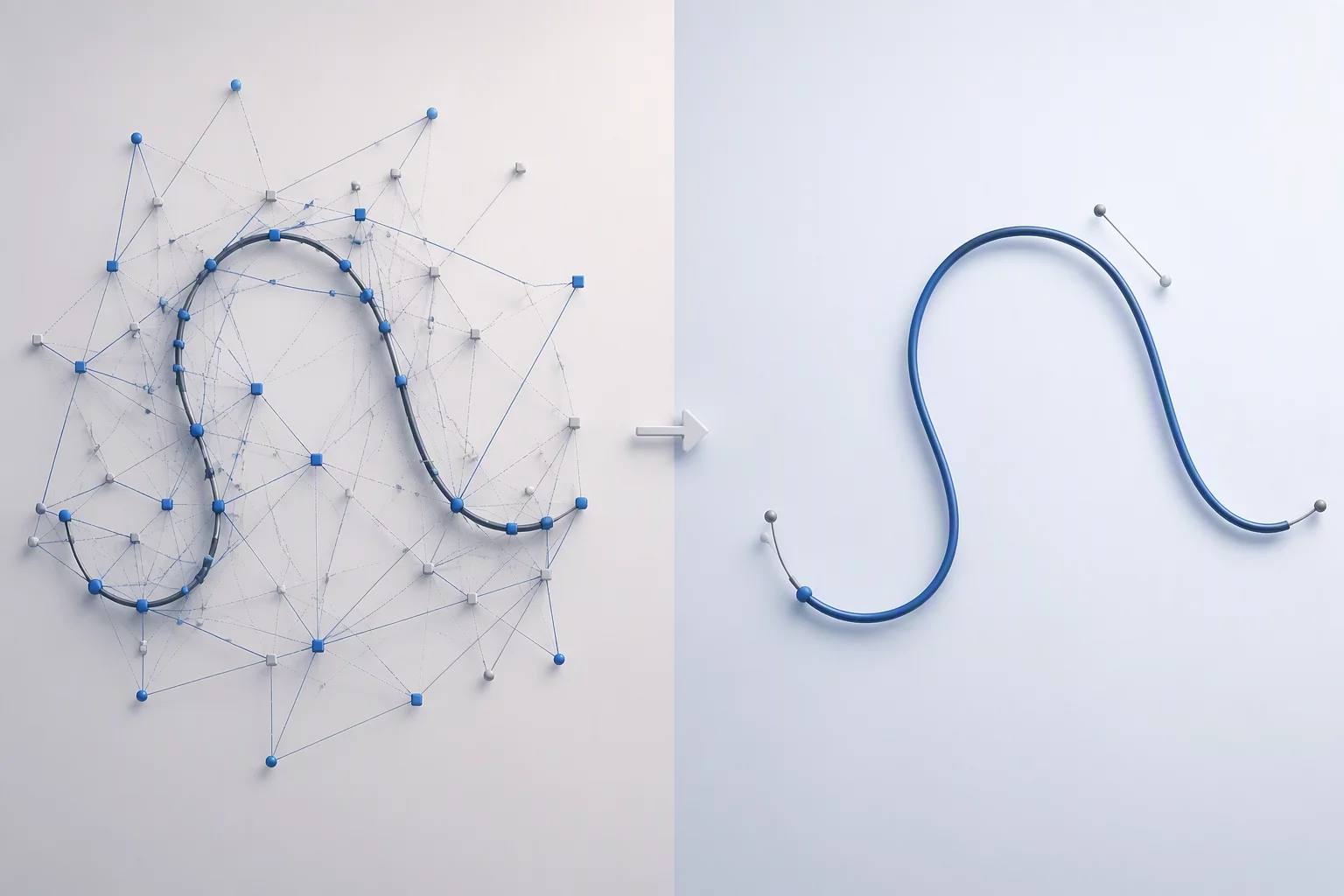
Even when trace settings retain every miniature feature, the resulting path geometry regularly contains redundant anchor nodes. When excessive control points occupy a space measuring under two millimeters, mechanical cutting carriages experience micro-stuttering. This rapid directional fluttering causes torn media, jagged vinyl edges, and distorted blade paths that compromise physical projects.
Entering the point editing mode allows creators to inspect and consolidate clustered nodes along critical path spans. Deleting non-essential collinear anchors while extending bezier control handles preserves the curvature without the erratic chatter of overcrowded nodes. Verifying the modified path geometry under high zoom guarantees that small flourishes remain visually crisp and mechanically sound on any fabrication tool.