Summary Table of Contents
An automated contour is only as functional as its mechanical viability; evaluating path geometry before output saves materials, plotter motors, and assembly hours.
- Node density must correlate directly with true design curvature rather than raster antialiasing noise or pixel staircase steps.
- Self-intersecting micro-loops and duplicate overlapping vertices cause cutter blade chatter, tearing delicate vinyl and cardstock.
- Pre-flight inspection saves hours: knowing when to adjust threshold filters versus manually rebuilding beziers cuts overall workflow duration by up to 60%.
01. Defining Usability in Automated Bezier Traces
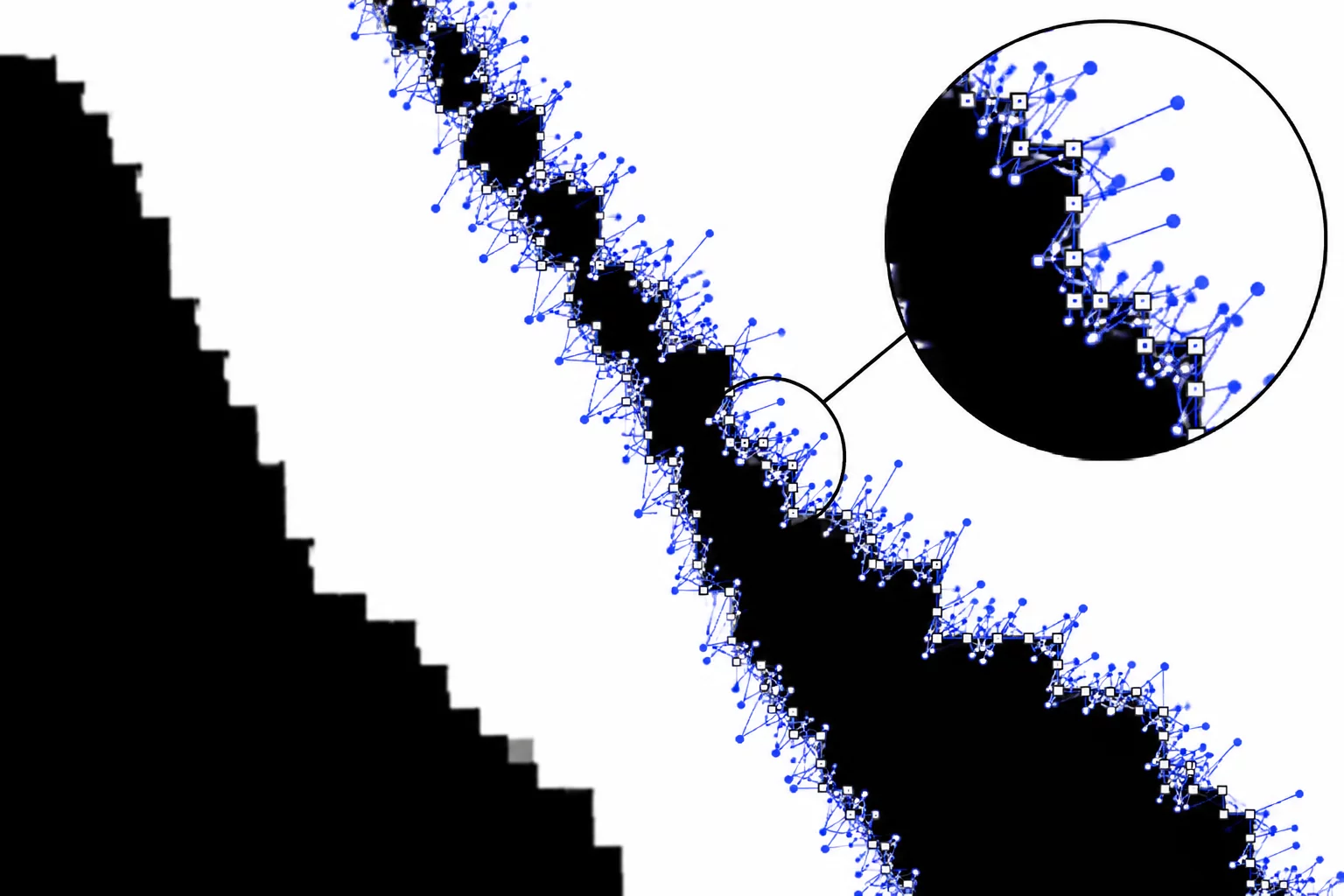
An automated tracing algorithm operates through pixel luminance thresholds rather than spatial intent. The software evaluates raster boundaries and fits bezier curves along transitions between dark and light pixels. In high-contrast artwork, the generated outlines frequently look convincing on an unmagnified canvas. When magnified to three hundred percent, the reality emerges: jagged steps, micro-inflections, and clustered nodes where a single smooth tangent belongs.
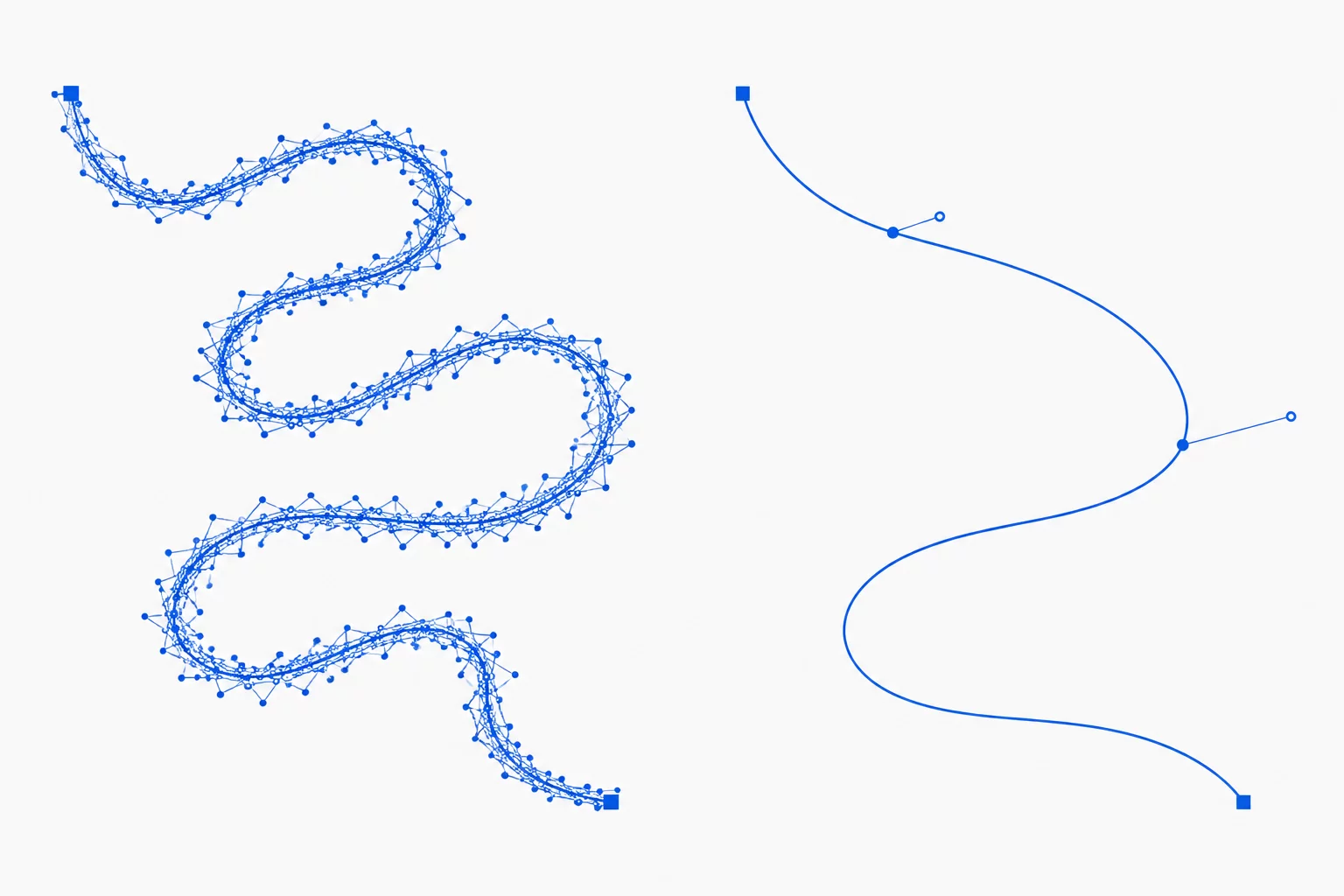
A path qualifies as usable when its computational geometry matches the physical constraints of production machinery. Digital vinyl cutters, laser beds, and CNC plotters interpret vector outlines as literal motion instructions for motor axes. Every unnecessary anchor point forces the motion controller to decelerate, recalculate trajectory, and re-engage acceleration profiles. A curve littered with twenty nodes instead of two smooth anchors degrades cutting fidelity and causes blade dragging along delicate edges.
02. The Physical Cost of Over-Densified Nodes
During automated tracing, slight pixel gradations deceive the algorithm into generating clusters of micro-segments. These clusters often measure mere thousandths of an inch apart. When transmitted to hardware, the machine cutter attempts to fulfill every single segment instruction, vibrating the carriage assembly and creating shredded edges instead of crisp cuts.
A vector path is never just an illustration on a monitor; in digital fabrication, it represents mechanical motor trajectories where every spurious anchor point translates into physical hesitation and blade stress.
The time needed to execute a cut path scales steeply with anchor point density. A clean outline consisting of forty well-placed bezier anchors cuts in eight seconds on a desktop plotter. The same graphic traced without threshold filtering may contain upwards of nine hundred anchors, extending the cut duration past ninety seconds while severely dulling the blade edge.
03. Critical Decision Criteria for Path Feasibility
Evaluating whether a trace should be kept, simplified, or redrawn requires objective geometric metrics. Before sending vector artwork to production or archiving it for project templates, test the contour paths against three standard engineering tolerances.
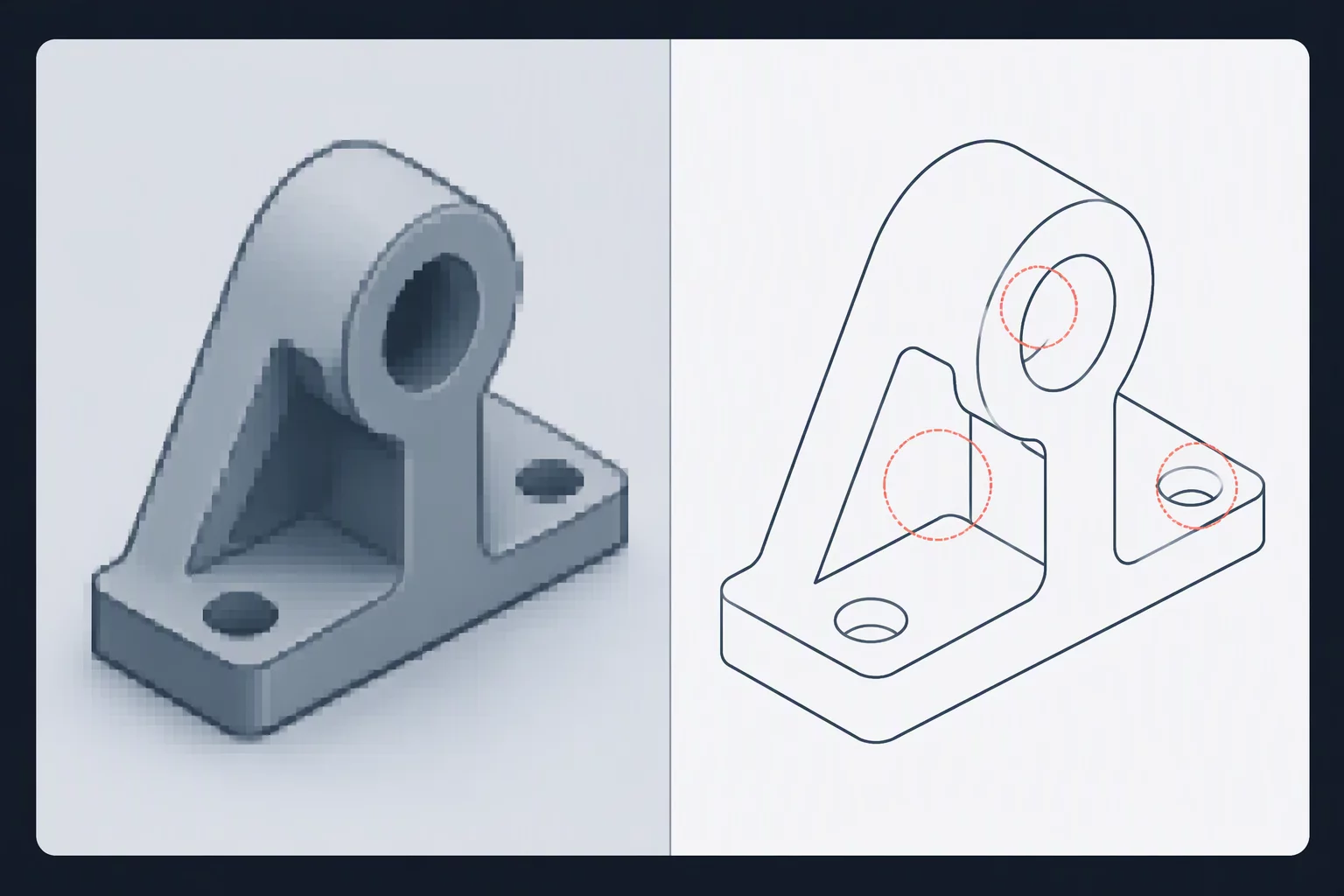
- Node-to-Arc Ratio: Smooth circular arcs and ellipses should feature minimal anchor points positioned at quadrant extremes; more than four nodes per quadrant indicates raster noise entrapment.
- Tangency Continuity: Curvature transitions across consecutive segments must sustain smooth tangent handle alignment without micro-angular zig-zags that bind stepper motors.
- Interior Loop Integrity: Counter spaces, negative cutouts, and compound holes must retain closed topological paths without zero-width bridges or overlapping loops.
Failing any of these criteria requires immediate triage. Attempting to manually delete dozens of random anchors across an irregular silhouette usually consumes more time than redrawing the silhouette with standard curve pens. Discarding unusable traces early preserves design fidelity and production momentum.
04. Remediation Strategies and Tool-Assisted Triage
When an initial trace yields problematic contours, adjust the input raster prior to vectorization. Increase canvas contrast to crush midtones, eliminate anti-aliased gray borders using levels adjustments, and scale up low-resolution raster graphics using nearest-neighbor interpolation. These preprocessing adjustments deliver stark, binary edges that allow trace algorithms to generate clean, long-span bezier curves.
For existing vector geometry containing mild roughness, apply dedicated path simplification algorithms. Setting a conservative simplification tolerance preserves crucial corner vertices while collapsing collinear nodes into uniform curve spans. Knowing when automated simplification suffices versus when an artisan bezier redraw is mandatory separates rapid production turnarounds from endless repair cycles.