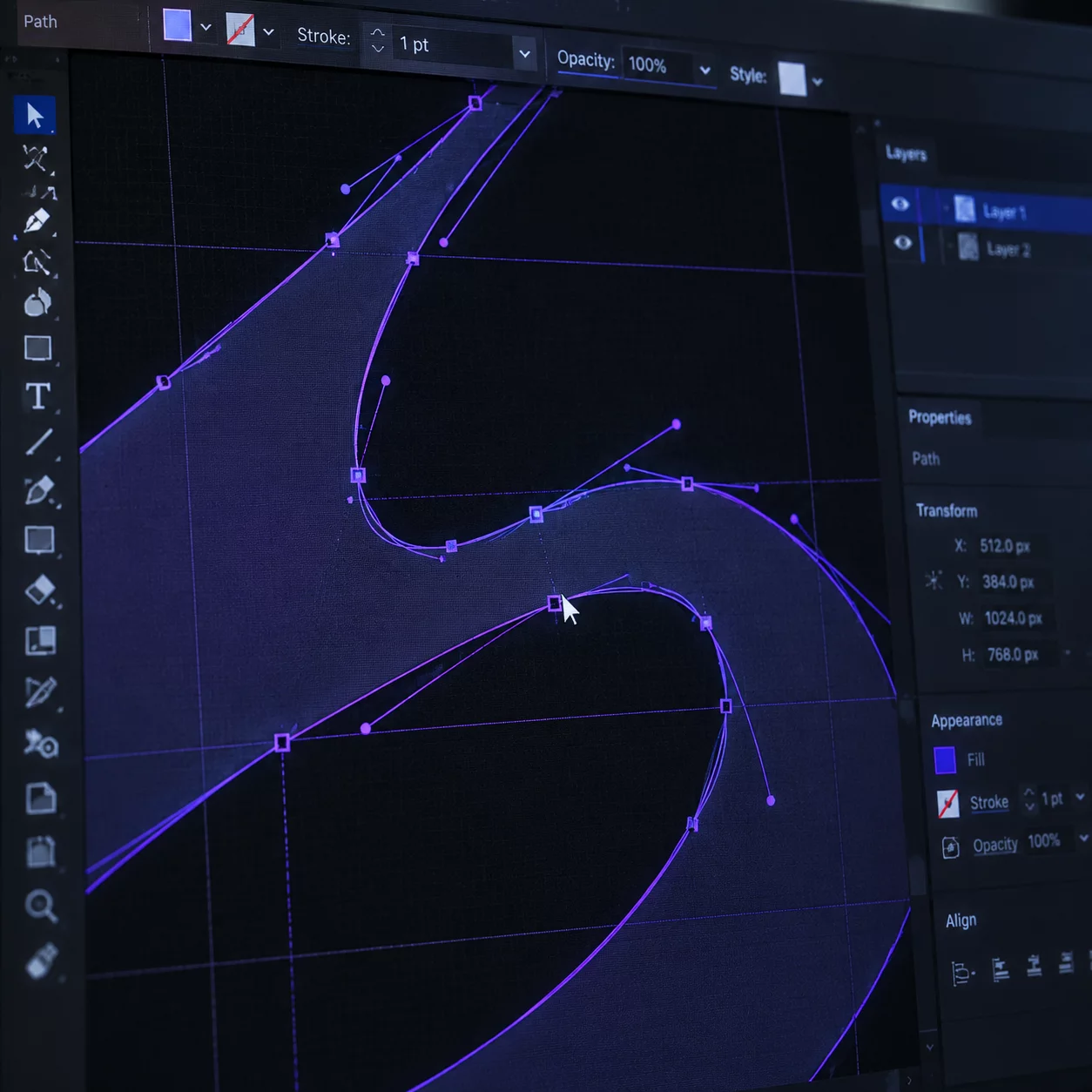
Demystifying Algorithmic Vector Tracing
TraceSource Notebook is an independent technical archive dedicated to the science of raster-to-vector transformation, path optimization, and edge-contrast interpretation for digital fabrication and plotter workflows.
Converting continuous-tone raster graphics into clean Bézier path networks requires balancing pixel quantization, luminance thresholds, and tangential anchor placement. We examine automated tracing engines, document node density pitfalls, and establish reliable calibration baselines.
Bézier Curvature Calibration
Detailed inspection of corner radius limits, inflection points, and tangent alignment to avoid jagged cuts on vinyl and laser hardware.
Luminance Threshold Diagnostics
Systematic testing of high-pass filtering, desaturation curves, and optical thresholding before running auto-trace pipelines.
Calibration Accuracy & Metrics
Our lab evaluates trace algorithms by measuring node redundancy, path smoothness tolerances, and outline deviation against reference master geometry.
View Engine ReviewsEngineering Vector Precision
Every guide and review in this notebook focuses on real-world vector stability, eliminating unnecessary cut-head passes and geometry collisions.
Quantization Limits
Determining minimum pixel dimensions required to retain sharp corners without introducing rounded artifacts during tracing.
Path Smoothing
Evaluating curve smoothing filters to reduce motor vibration and micro-jitter in digital vinyl plotters and CNC tools.
Color Separation
Decomposing multi-chroma bitmap source assets into closed vector layers optimized for vinyl stacking or screen print screens.